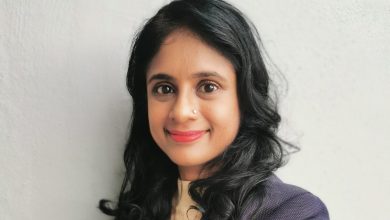

By Dato’ Dr Amar-Singh HSS
Consultant Paediatrician, Child-Disability Activist
The Rancangan Pendidikan Malaysia (Malaysian Education Plan) 2026-2035 (RPM 2635) has just been launched. RPM 2635 has the slogan “Closing the Gap, Raising the Bar, Together We Succeed” (theme “Bridging the Gap, Improving Quality, Achieving Success Together”). The document states this reflects “the spirit of cooperation across the education ecosystem to ensure that no student is left behind, every school continues to improve performance and all parties move together towards inclusive and sustainable success” (a translation from the Bahasa Malaysia version).
A wonderful focus that we hope will enable each and every child in Malaysia to be included, supported and enabled to get a meaningful education.
Sadly, the document seems to have omitted any serious focus on children with disabilities. The RPM 2635 is 44 pages long with a word count exceeding 9,000 but there appears to be only very few references to the disabled. One is on page 12 where it states that “As of 2025, only 37.4% of schools have been upgraded with Disability-friendly facilities”. Another on page 36 under implementation of the RPM 2026–2035 on “Improving Disabled-Friendly Facilities”. And in the five main focuses on Page 7, under “Access and Equity” it is stated that “The concept of equality and equity here emphasizes that every Malaysian child has the right to quality education, regardless of social, economic, geographical and disability background.” In addition, the Prime Minister had announced that all students with disabilities studying at public institutions of higher learning (IPTA), polytechnics, and community colleges will receive free education.
There are suggestions or hints within the RPM 2635 that may allude to children with disabilities. For example, in the five main focuses on Page 8, under “Flexibility” it states that “Flexibility emphasizes the ability of the education system to adapt pedagogical approaches according to the needs and abilities of students …. A more inclusive and student-centred learning approach ….”. Another on Page 10 under “Aspiration & Target” “Access: 100% enrolment across all levels of education from preschool to senior secondary”. Finally, under Strategic Thrust 4 on Page 20 “investment in universal design”.
But all this may be clutching at straws and the plans may not refer to children with disabilities. Can we assume that MOE is so seamless and visionary that when they say “all students” they implicitly mean all children, including those with a disability? When you do not have a vision, mission and policy that clearly spells out the focus on, and support of children, with disabilities then you will neglect them. Basically, the RPM 2635, the road map for education for the next 10 years for Malaysia does not meaningfully include child with disabilities
At the current stage of development of our nation, after decades of advocacy for the disabled by many and with numerous promises made by the political parties, this is a very sad state of affairs. It is interesting that none of our Members of Parliament have yet spoken up about this glaring omission.
The RPM 2635 speaks beautifully about inclusivity and unity “An education system that offers children shared experiences and values by appreciating diversity” … “fostering a spirit of unity, character building, supporting social and emotional development by taking into account the diversity of students”. But how will there be any appreciation of diversity if we do not have a concerted plan to include the 10-15% of all children who have disabilities into mainstream education? We can only appreciate diversity when we can share in the lived experiences of each other.
If I am the parent of a child with a disability I will say this policy does not include my child or meet their needs.
It is important to remember the long-term economic cost of failing to implement inclusive education for children with disabilities – lower future productivity, higher welfare dependence, less diverse and accepting population.
There can be no ‘Bridging the Gap, Improving Quality, Achieving Success Together’ if there is no together. As it stands today the gap in education between children with and without disabilities has grown in a chasm and the RPM 2635 as it stands may leave children with disabilities lagging even further behind.
I hope our MPs will ask for the RPM 2635 to be reworked to include all children, including those who are disabled. Inclusive mainstream education, universal design for learning with reasonable accommodation and universal design physical structure are all critical policies that must be the foundation of any meaningful national education plan.