
By Aida Aziz
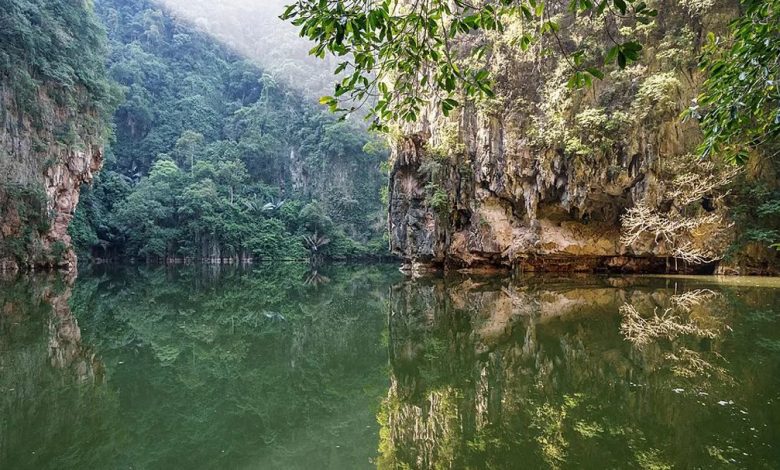
IPOH: Limestone hills are a natural heritage of great importance to humanity and are also a valuable national treasure.
Quoting the writing of Associate Professor Dr. Adnan Jusoh titled Natural Heritage of Limestone Caves in the Kinta Valley, it can be said that almost all limestone hills in Perak are located close to urban areas.
These include Ipoh, Gopeng, Kampar, Sungai Siput and Tanjung Rambutan, except for several limestone hills in the southern parts of the state, namely Klian Intan and Gerik, which are said to be less developed in terms of infrastructure.
Recognising the importance of limestone hill conservation, the Ipoh City Council (Majlis Bandaraya Ipoh, MBI) signed a Letter of Intent (LOI) with Universiti Malaysia Sabah (UMS) at a ceremony held at the Institute for Tropical Biology and Conservation (IBTP), Universiti Malaysia Sabah.
This marks an initial step towards strengthening strategic cooperation between local authorities and institutions of higher learning in the fields of environmental conservation and local community development.
The LOI was signed by the Mayor of Ipoh, Zamakhshari Hanipah, and the Director of the Institute for Tropical Biology and Conservation, UMS, Dr. Fiffy Hanisdah Saikim.
Zamakhshari said that the LOI reflects the shared commitment of MBI and UMS to promote the conservation of limestone hills in Ipoh, while ensuring that local community development is carried out in a sustainable, inclusive and knowledge-based manner.
“This LOI serves as the foundation for research-based collaboration, expertise sharing and community engagement, in line with the sustainable development agenda and environmental preservation,” he said.
The agreed cooperation includes the implementation of research related to community involvement and the conservation of limestone hills in Ipoh.
It also covers the assessment of the sustainable development status of local communities in areas surrounding limestone hills, as well as knowledge exchange and the implementation of capacity-building programmes guided by the findings of joint research.
MBI also expressed its appreciation to UMS for its willingness to host the event and for its continued commitment to ensuring the success of the collaboration, including related studies conducted by UMS in 2025.
Meanwhile, touching briefly on limestone in the Kinta Valley, Adnan, in his book Perak: Heritage, Culture & History, explained that one of the locations with clusters of limestone caves in the country is the Kinta Valley.
The Kinta Valley is the most densely populated and developed area in the state. It refers to the Mukim of Hulu Kinta, located within the Kinta District and administered under the Kinta Land and District Office.
“Kinta limestone consists predominantly of calcite grains, although there are also layers rich in dolomite. Some of these rocks have undergone transformation into mafics, and are generally light in colour.
“Within this limestone sequence, there are also layers of schist and phyllite containing carbon. The Kinta limestone underlies the Kinta Valley and forms the bedrock representing a large portion of this area.
“However, in recent times, areas surrounding limestone hills have generally been developed for agricultural activities such as fruit trees and vegetable farming.
“Meanwhile, the alluvial plains and metasedimentary hills have also been developed into housing estates, theme parks, commercial plantations and the like.
“Any disturbance and unplanned development is feared to threaten the habitats of flora and fauna, especially in areas surrounding limestone caves. The greatest impact would be an imbalance in ecosystems, ultimately affecting human life as a whole,” he wrote in the book.