
By: Zaki Salleh
IPOH – For the generations who grew up in the 1980s, the name Siri Bercakap Dengan Jin (Speak With Jin Series or SBDJ) is certainly familiar, with the horror series once creating an extraordinary phenomenon in Malaysia’s popular publishing scene.
The work, written under the pen name Tamar Jalis, was authored by Ahmad Mahmud and published as a serial in the small-format magazine Variasari from around April 1981 until January 2005.
Over a period of 23 years and six months, SBDJ was published in 284 instalments, making it one of the longest-running serial literary works in Malaysian popular literature.
The popularity of SBDJ also boosted sales of Variasari, which at its peak reportedly reached a circulation of approximately 120,000 copies a month, demonstrating the enormous influence of the series at the time.
SBDJ was more than just a horror or mystical novel, as it was written in the form of an autobiographical memoir of Tamar Jalis and his grandfather, Kulup Muhamad Diah, also known as Long Mat Piah.
Around 60 per cent of the content was based on true stories and experiences involving Tamar Jalis and his grandfather during his childhood and teenage years.
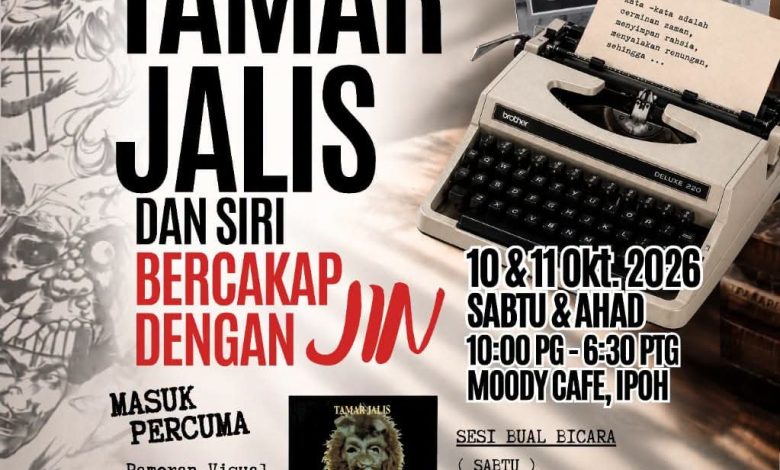
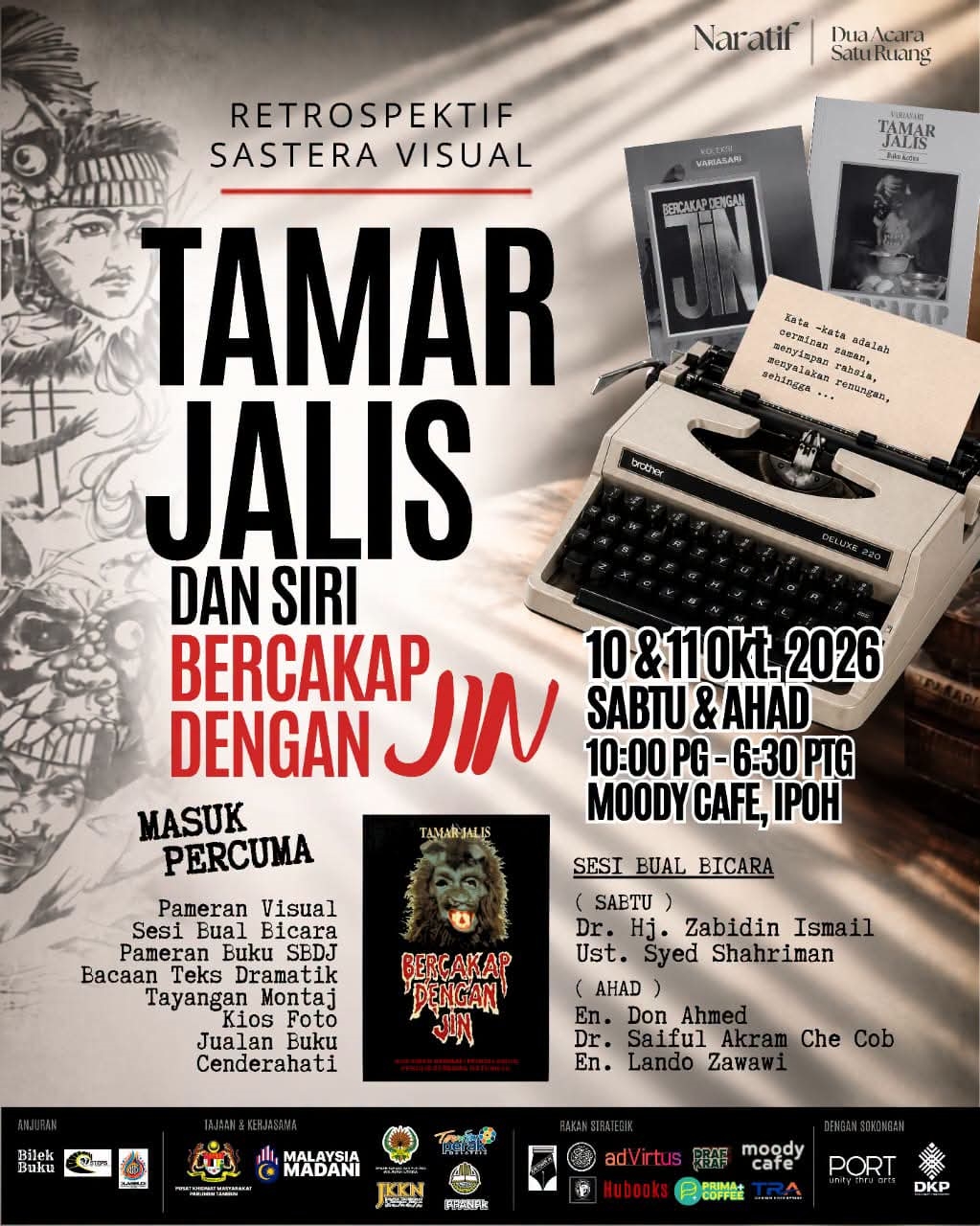
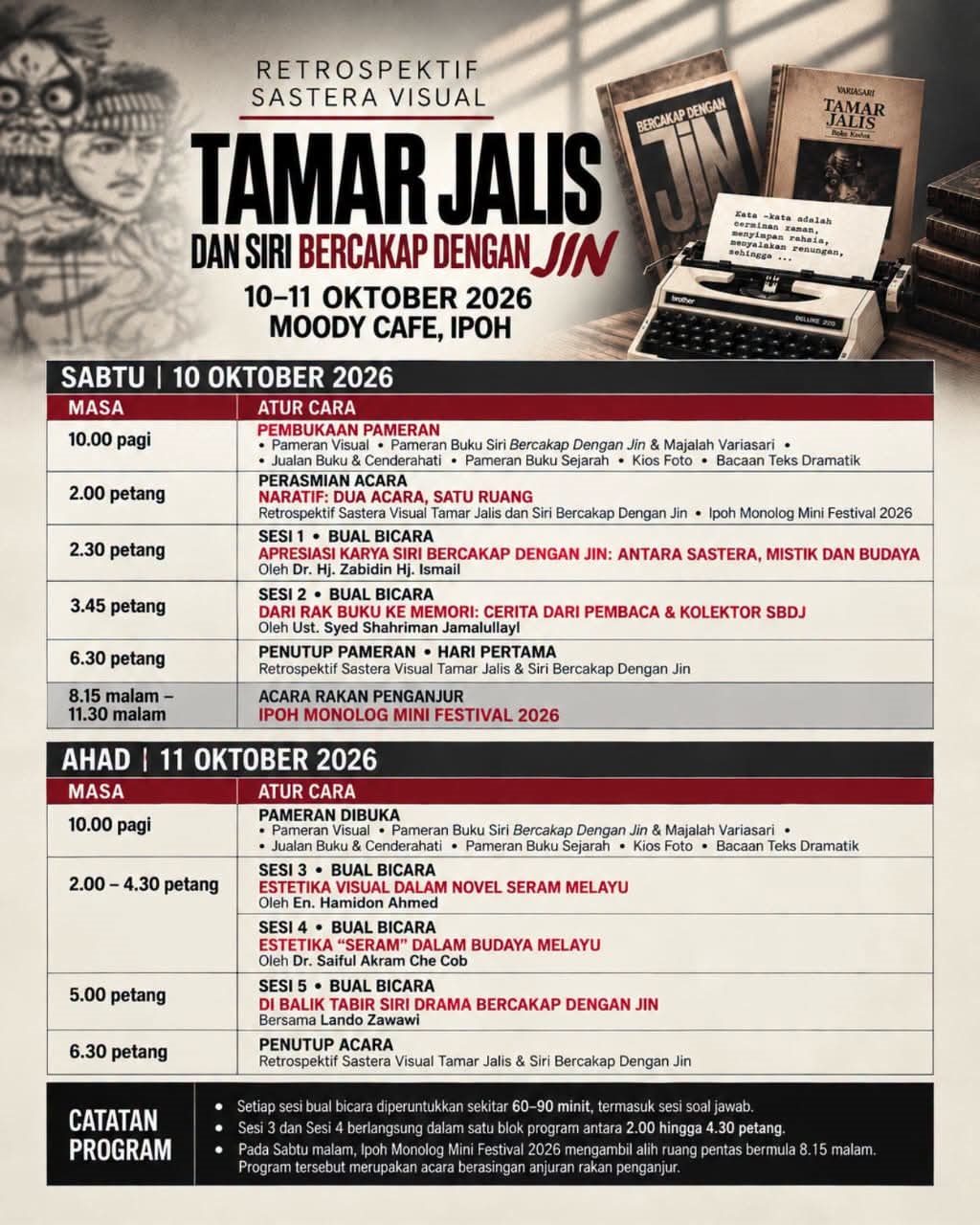
The work is now being revisited through the Tamar Jalis & Siri Bercakap Dengan Jin Visual Literary Retrospective, taking place at Moody Cafe, Ipoh, on October 10 and 11.
Visitors will have the opportunity to revisit the legacy of SBDJ through collections of old books and magazines, visual exhibitions, a photo kiosk, as well as book and souvenir sales.
A sharing session featuring panelists connected to Tamar Jalis’ works will also be held, offering perspectives on the history and influence of SBDJ on Malaysia’s popular literary landscape.
On the night of October 10, the venue will also be transformed into a small stage for the Ipoh Monolog Mini Festival 2026, featuring six performing artists presenting their respective monologues.
The programme runs from 10am to 6.30pm, with free admission, providing an opportunity for literature and arts enthusiasts to rediscover a work that once became a major phenomenon in Malaysian popular culture.