By Dr. Cecilia Chan
This is our fourth year working with the Totsu-Totsu team from Japan, and each time, we learn something new. Last week, I managed to tick off a bucket list item: bringing dementia to the Georgetown Festival. We did it, of course, through Totsu-Totsu. It was a magical moment for me, and I’m sure for many others, too.
A lot of people (myself included, at first) are puzzled by what Totsu-Totsu is. Many assume it’s a form of therapy or exercise to get people with dementia to participate. It’s so much more complex than that. You have to let go of all your preconceived ideas and structured conditioning to be truly liberated and experience the moment. Each person experiences it differently, much like in the world of dementia. Each moment is unique.
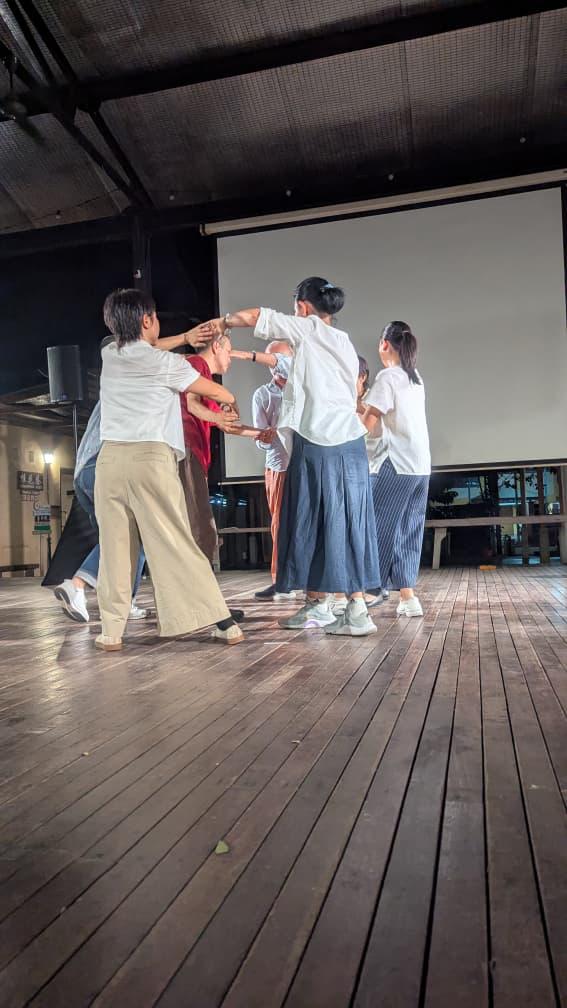
The performance at the Georgetown Festival, “Totsu-Totsu Dance, Like Art, Like Care,” is impossible to describe; it can only be experienced. I can only share my reflection.
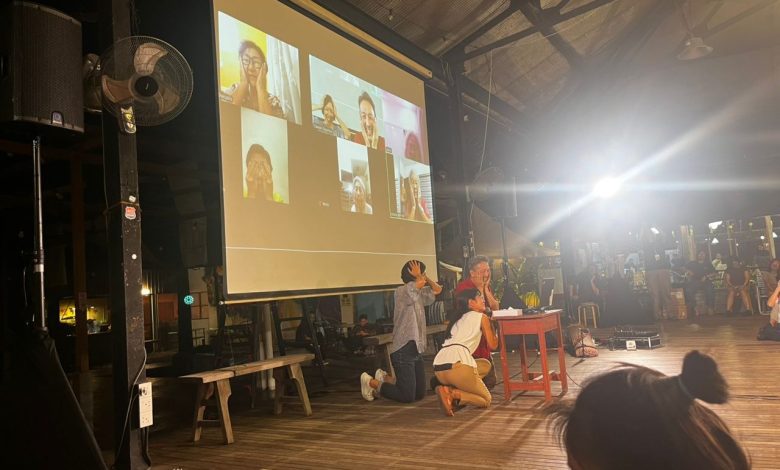
The online sessions we held with the Totsu-Totsu team and our friends living with dementia were crucial during the lockdown. An online session with Jareo and my friends provided a glimpse of this. I remember being told that conducting online sessions with people with dementia wasn’t possible because they wouldn’t be able to follow or engage. Being a rebellious woman, I did it anyway, and I’m so glad I did. It gave us a world to connect in, beyond the isolation we were all experiencing. I felt this was a perfect way to start the performance.
The performance itself beautifully conveyed the fundamentals of person-centred dementia care: touch, eye contact, and connection—principles my team and I have been advocating for. I believe the dance touched the core of every audience member. We were all fully in the moment, which is the key to connecting with people living with dementia. Performing arts, like this dance and movement, enable creative expression and foster meaningful engagement for all of us, breaking down barriers of separation.
The creative arts offer a powerful way for us to connect and express ourselves, even when verbal communication is challenging. It can foster social interaction, reduce anxiety and depression, and enhance the overall quality of life for everyone. I believe the beauty of the creative arts lies in their ability to transcend limitations. When individuals engage in artistic expression, they experience freedom—freedom from societal expectations, language constraints, and the frustrations of cognitive decline.
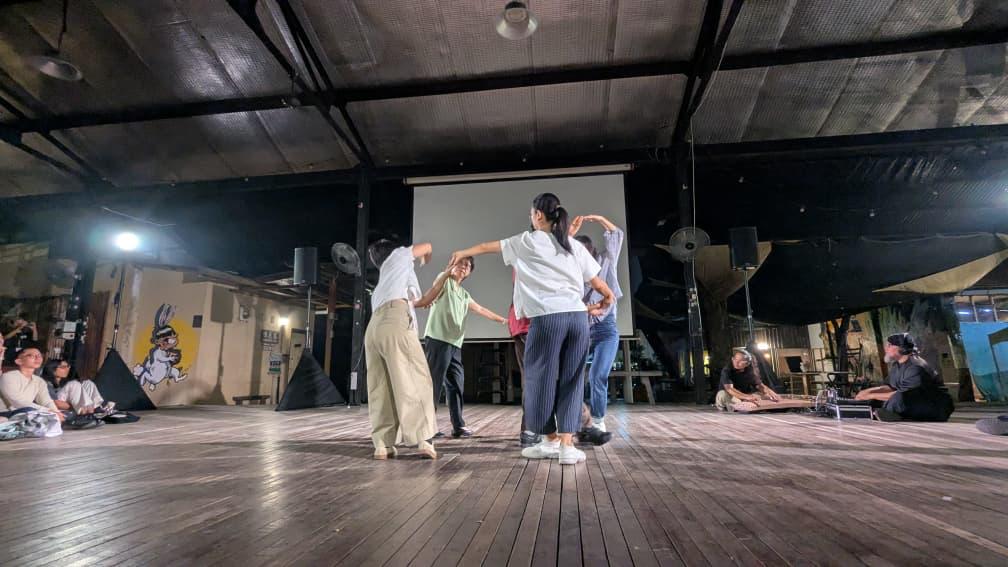
When Ms. Tan, a care partner, read from her journal while supporting her mother and aunts (both living with cognitive changes), you couldn’t find a dry eye in the audience. It was poignant, real, and so human. She then joined the dancers, weaving through their dance of connection. Words truly fail to capture the profoundness of that moment.
In the world of dementia, touch is often reduced to a task rather than a way to connect. It becomes about hygiene, feeding, or taking blood pressure. When touch is limited to these tasks, a person can feel more like an object than a person worth meeting. Such experiences can profoundly impact a person’s ability to form relationships. We’ve all felt this as patients in a hospital. How we, as human beings, are touched inevitably shapes how we feel about ourselves and our relationships. In this context, it makes complete sense why some people might respond to being touched during care tasks with protest or withdrawal.
So, it’s time to reimagine dementia. It’s time to start breaking down walls and building bridges instead. It’s time for us to widen our circles of belonging to include all people. We must acknowledge a fundamental truth: we are all interconnected. We only belong if we belong together.
This is my reflection on my two days with Totsu-Totsu Dance, Like Art, Like Care at the Georgetown Festival 2025. This is what happens when art meets healthcare.