
THE SIGNS OF CATARACTS AND WHAT TO DO
Have you noticed your world gradually becoming foggy? You might be among the many developing cataracts, a common eye condition where the eye’s natural lens becomes cloudy. Recognising the symptoms is the first step to clearer vision.
The most common sign is blurry or filmy vision at all distances. You may find it increasingly difficult to drive at night, as oncoming vehicle headlights cause disabling glare. Colours may seem washed-out. One of my patients was surprised after her cataract surgery to find that her brother’s car was actually white in colour and not the brown she had seen for years through her cataract.
THE PARADOX: SECOND SIGHT OF AGEING
Paradoxically, some experience “second sight of ageing,” where their reading vision temporarily improves. This is not a miracle but a symptom of a cataract temporarily changing the lens’s shape, and it is usually short-lived. Another subtle sign is the need for a change of prescription glasses every few months.
Many people don’t notice the slow change, especially if only one eye is affected, as the other compensates. Cataracts develop slowly and painlessly. Waiting until they are overly “mature”(hypermature) can lead to serious complications like glaucoma.
YOUR EYE CHECK-UP: WHAT TO EXPECT
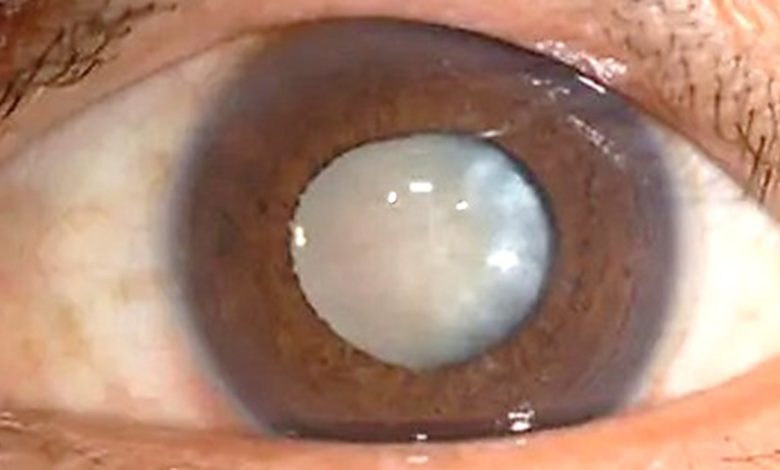
A thorough cataract check is a detailed process. After a standard eye chart test, your eye doctor will use a bright light to examine your eye’s front structures. The picture on the left (arrow) shows a mature cataract (cloudy).
The key part involves dilating your pupils with special eyedrops. This can take 30 to 90 minutes, so patience is essential, especially for diabetic patients. Once your pupils are dilated, the doctor can properly examine the lens for cataracts and the retina’s health. This helps predict your visual outcome after a cataract surgery. Bring your sunglasses, as you will be temporarily sensitive to light after your eye check, and you may need someone to drive you home.
PLAN FOR SURGERY:
If diagnosed, remember, surgery is rarely an emergency. It’s a decision to be made after discussing your lifestyle with your doctor and ensuring conditions like diabetes are well-controlled. The next step is selecting the right intraocular lens to meet your visual needs. Don’t let cataracts cloud your life—a simple check can set you on the path to seeing your world in high definition once again!
Dr. Gill will discuss more about cataracts in the next issue of the Ipoh Echo. For more information, call 05-5455582 at Hospital Fatimah or email gilleyecentre@dr.com