
By Anne Das
Around the world, honey bee populations are declining at alarming rates. According to the United Nations, nearly 35 percent of invertebrate pollinators including bees and butterflies are facing extinction. If this continues, nutritious foods like fruits, vegetables, and nuts could disappear from our diets, replaced by rice, corn, and potatoes.
The main culprits? Pesticides, climate change, monoculture farming, and fear.
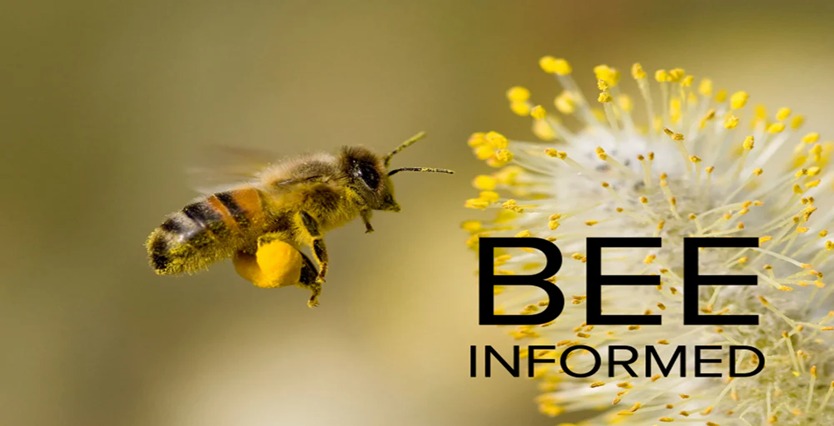
Efforts to protect bees are happening all over the world. Communities are transforming rooftops into bee-friendly habitats. Schools and local farms are introducing pollinator education, helping children and adults alike understand the role bees play in our ecosystem.
Honey bees can be safely relocated. In Ipoh, there is already a system in place that brings together trained volunteers and BOMBA to manage bee-related reports calmly and responsibly.
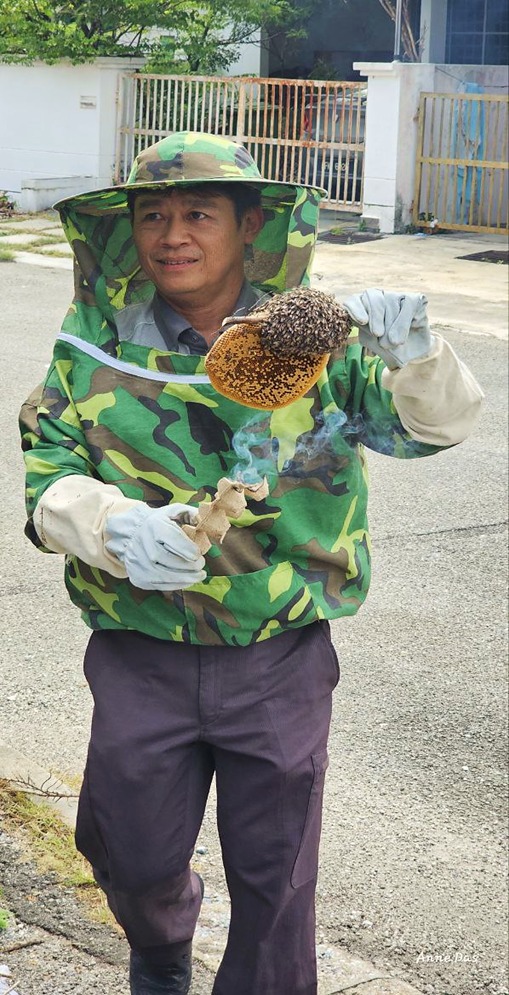
Meet Steven. He is one of the few trained volunteers in Ipoh who relocates bee colonies safely. After office hours, he swaps his work shirt for a bee suit and responds to community reports. He works with BOMBA through a dedicated WhatsApp group, helping ensure each rescue is done without harm to bees or people.
“People often panic when they see a hive, but honey bees are calm unless provoked,” Steven explained. “There’s almost always a safe way to relocate them.”
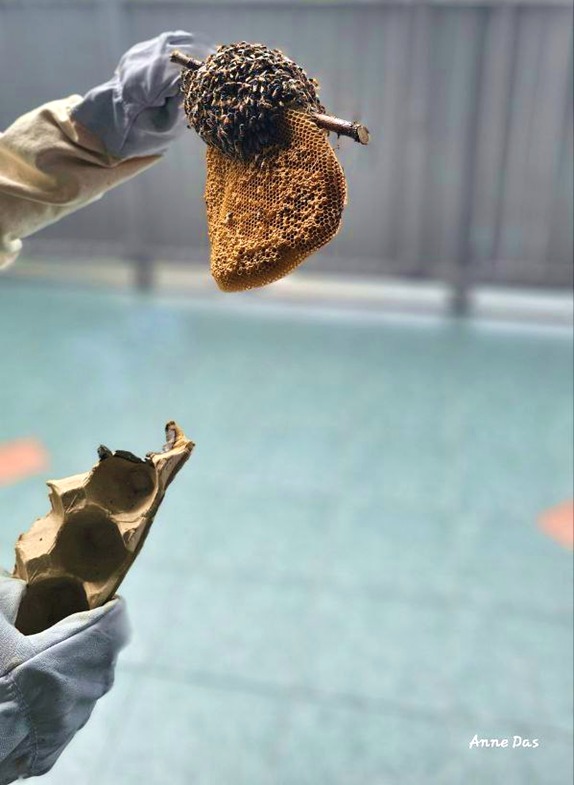
Not all bees are the same. In Malaysian neighbourhoods, the most common species are Apis florea (dwarf honey bees) and Apis florea (Asian honey bees). These species build visible, open-air hives on tree branches, rooftops, and overhangs. If the hive looks small and is exposed, it’s likely a wild honey bee colony that can be safely relocated.
However, if you encounter a ground nest, hornets, or wasps (especially if the insects are aggressive) do not approach. In such cases, BOMBA should be contacted immediately for assistance.
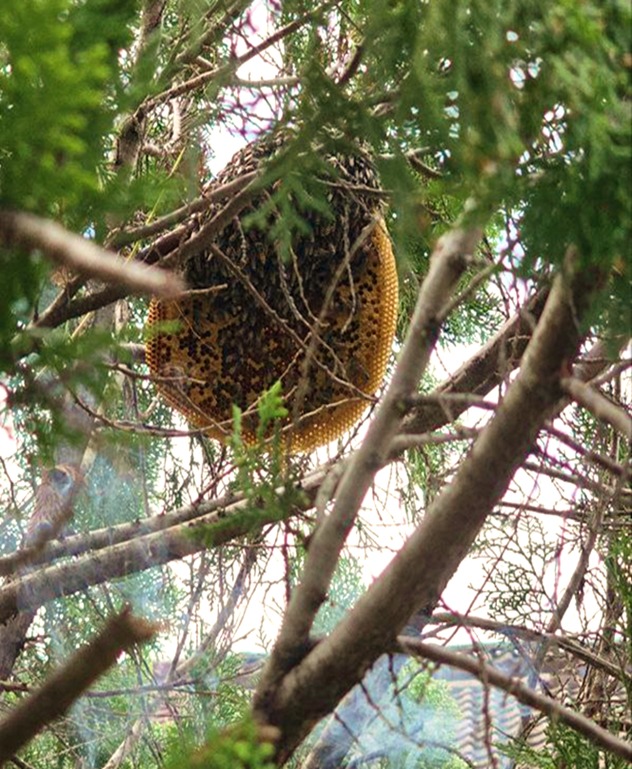
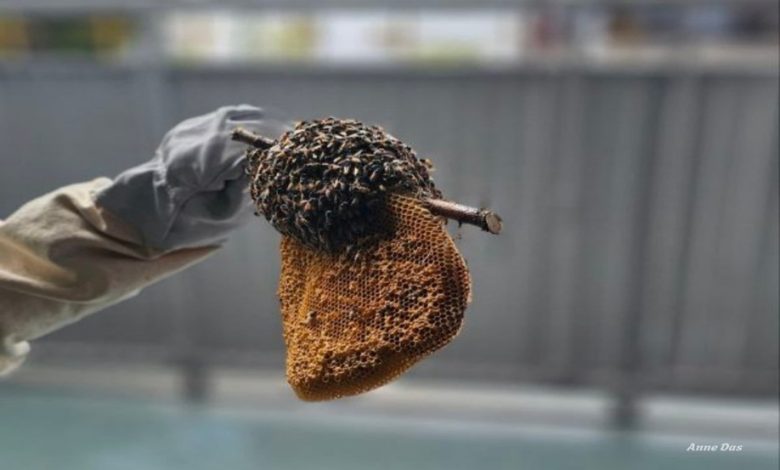
When a hive began forming in a tree at a home in Ipoh Garden South, the residents reached out to Ipoh Echo, hoping to find a safer alternative to extermination. Within 24 hours, Steven responded. Dressed in full protective gear, he assessed the hive, built by Apis cerana. The bees were active but calm.
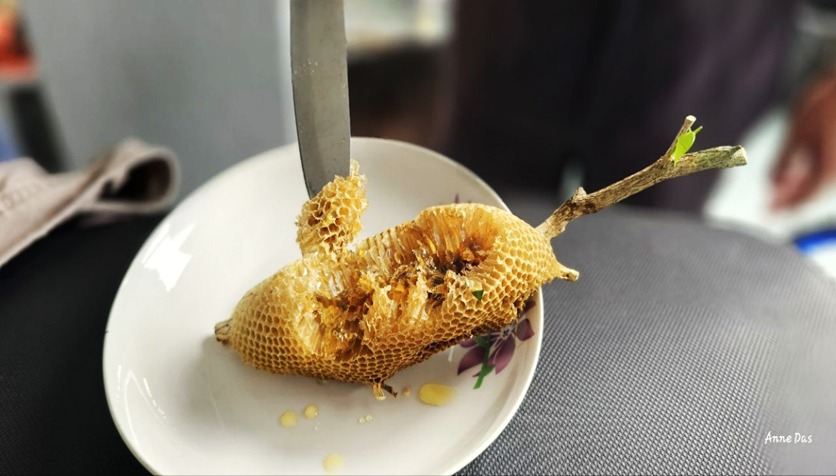
Using a soft smoker and minimal disturbance, he identified the brood comb and carefully dislodged it from the branch. The bees were transferred into a containment box and later relocated to a forested buffer zone near Gunung Lang.
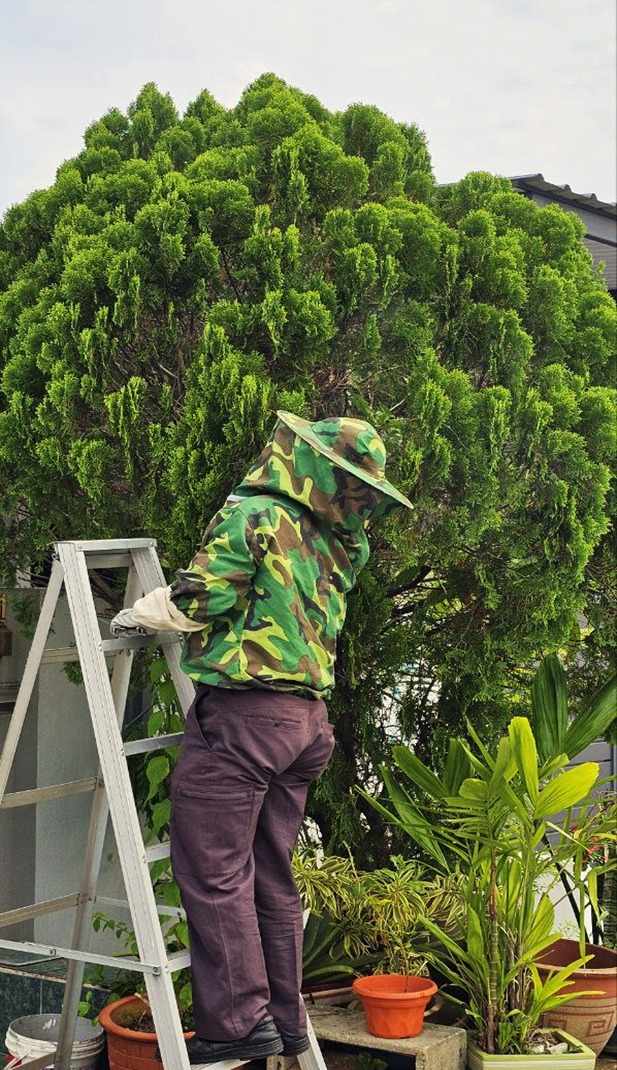
Relocations typically happen after hours or on weekends and are never done in the rain. Steven responds to up to fifteen honey bee cases a week and hopes to train more volunteers to meet the growing need. If you’re interested in learning how to safely relocate bees, reach out and join the effort.
Honey bees are not pests. Yet the default response is often to spray or burn the hive, actions that provoke the bees and lead to unnecessary stings or fatalities. BOMBA only proceeds with extermination if no bee saver responds within 24 hours.
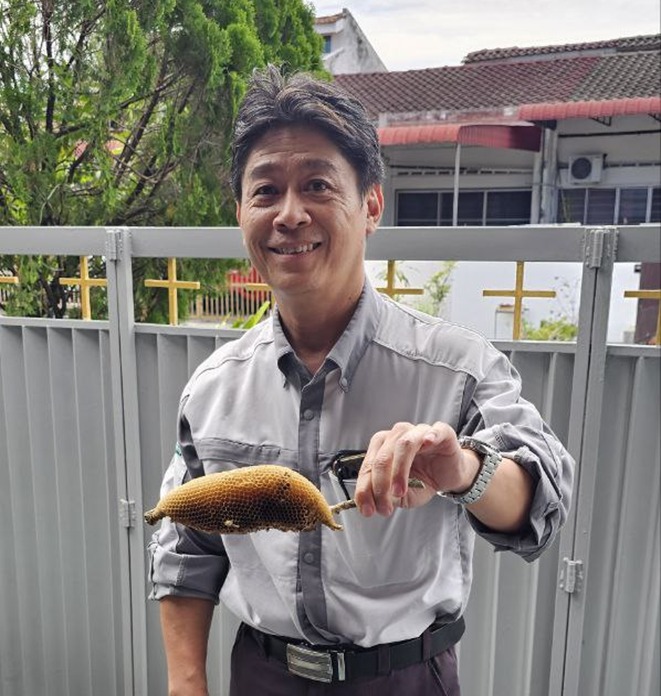
During the relocation at Ipoh Garden South, Steven took a moment to walk the family through what was happening. He pointed out the hive structure, described how bees guard their queen, and explained that bees rarely attack unless they feel threatened.
“Education is just as important as rescue,” Steven said. “The more people understand bees, the more they’re willing to save them.” Every hive relocated is a step toward protecting our environment.
What to do if you spot a hive:
🐝 Remain calm and do not disturb the bees
📸 Take clear photos of the hive from a safe distance
📍 Share your address and location pin
📱 WhatsApp the details to Steven at 017-573 8318
🚒 If the hive is large, aggressive, or in a dangerous location, and no relocation volunteer is available, you may contact BOMBA for assistance at 05-253 4444 (Ipoh Fire & Rescue Department).

🔁 Like and share this page to help raise awareness in our community.
#SaveTheBees #IpohBeeSaver #PollinatorsMatter