
By: Rosli Mansor Ahmad Razali
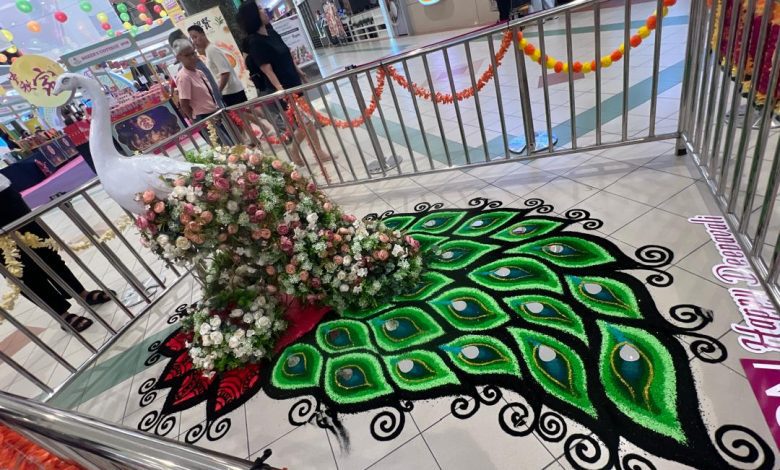
Kolam is a traditional Indian floor art created using white or colored rice flour, often showcased during Deepavali as a symbol of light triumphing over darkness.

The art form is believed to date back to the Indus Valley Civilisation around 2500 BCE. In the Mahabharata, the gopis drew kolam to honour Lord Krishna.
Across India, kolam is known by different names depending on the state and dialect: rangoli in Maharashtra, muggu in Andhra Pradesh, and kolam in Tamil Nadu.
Creating kolam involves soaking, washing, and grinding rice into a fine powder. The powder is then spread over a clean floor surface. Artists mark points as guides and draw lines according to the desired pattern.
Beyond decoration, kolam carries deep symbolic meaning. It is considered an invitation for Goddess Lakshmi, the deity of wealth and prosperity, to enter the home. Rice flour kolam also provides food for small insects, reflecting care for living beings and harmony with nature.

In Malaysia, kolam is an integral part of Indian, particularly Tamil, cultural traditions. The art is practised not only in private homes but also in public spaces and shopping centres, where colourful rice flour designs attract visitors during Deepavali celebrations.
Despite its rich cultural heritage, kolam faces challenges in the modern era. The use of chemical dyes and synthetic colours has increased due to their brightness and ease of use, sometimes affecting the traditional and eco-friendly aspects of the art.

Kolam is more than just floor decoration; it symbolises hope, spiritual cleanliness, and social unity.
Through kolam, the Indian community in Malaysia not only commemorates their history and culture but also instils timeless values that can be appreciated by all.
This Deepavali, on 20 October, let us celebrate and preserve the kolam tradition as a valuable cultural heritage.