
By KT Leong
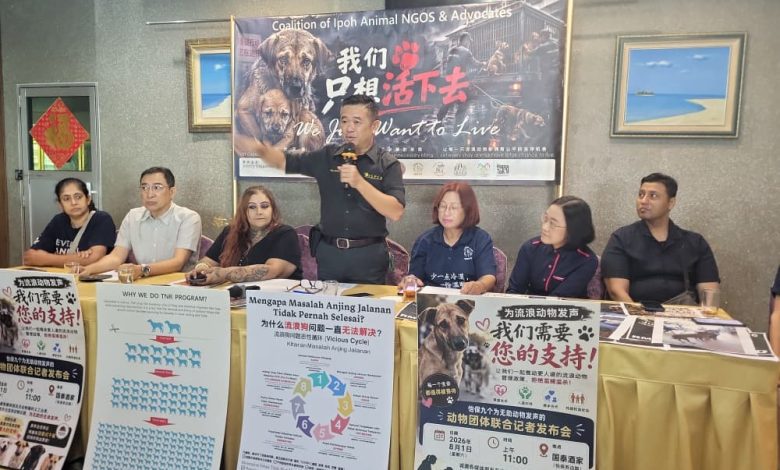
A coalition of Ipoh animal Non-Governmental Organisations (NGOs) and advocates, gathered today at Kok Thai Restaurant, to voice their concerns over the issue of controlling the population of strays, such as dogs and cats.
According to the coalition, the challenge facing them right now is the high number of animals being captured and the procedures to rescue them, which have become restrictive and frustrating.
The coalition claims that previously, they could expect 5 or 6 animal captures a day, or around 30 to 40 a week. But now, the Ipoh City Council (MBI) has been capturing as many as 12 a day, or 50 to 60 a week.
To bail out an animal, it costs RM250. As NGOs, they can receive a RM50 discount. However, the procedure now is that they only have only 3 days to bail out the animal to get the discounted rate. They must get an inventory list by the first two days and process documents across several buildings before they can bail out the animal.
This is before additional costs like medical attention and sterilization. Also, they are not allowed to return the animals to their original area where volunteer feeders are already there. So they must find new homes for the animals as well.
The coalition says that the 3-day window, encumbering procedures and higher number of captures are making it so that they can’t keep up. As soon as they’ve finished rescuing one batch of strays, another batch is already brought in.
If the NGOs can’t rescue the strays, the animals will be put to sleep (PTS).
Asked on what they wanted the MBI to do by Ipoh Echo/Peraktastic, Ricky Soong, President of the ISPCA, stated that they would like to discuss the implementation of a Trap-Neuter-Release-Manage (TNRM) programme.
From 2017 to 2022, animal welfare NGOs had been practicing Trap-Neuter-Release (TNR), whereby animals caught are sterilized and released, with their ears clipped and a red collar to indicate that they have been processed. So these strays pose no threat of reproducing and will eventually die out on their own. However, according to members of the coalition, these animals were eventually rounded up and put to sleep anyway. Among the reasons given were that there were complaints that there were too many strays with the red collars.
This time, the coalition would like to use the TNRM method, whereby the animals would also be microchipped, so that they can identify the ones who were abandoned by their owners.
Asked to elaborate during a sit-down interview, Mr. Soong said that they simply want to collaborate with the MBI and resolve any issues, without culling the animal. He cited incidents in the past where MBI and NGOs worked together to resolve matters without loss of life. NGOs are more than happy to shelter strays that cause trouble and dangerous animals would understandably have to be culled, but friendly and docile animals should be given the space to live their lives.

The coalition consisted of:
1) Pertubuhan Tabung Makanan Haiwan Kiko Kinta, Perak (Kiko Food Bank)
2) Persatuan Prihatin Haiwan Terbiar Ipoh, Perak (PapanSouls)
3) Kelab Kesedaran dan Kekejaman Haiwan Peliharaan Ipoh Perak
4) Ipoh Jaya Animals Haven
5) Persatuan Kebajikan Pencinta Anjing Jalanan Ipoh (PAJ)
6) Pertubuhan Pencinta Haiwan Terbiar Kasih Belaian Ipoh Perak (Happy Tail)
7) Pertubuhan Perlindungan Haiwan Terbiar Ipoh, Perak (Furkid Haven)
8) Filberts Fraternity for Furry Friends Organization (F5)
9) The Ipoh Society for the Prevention of Cruelty to Animals (ISPCA)