
By Aida Aziz
Photo: MBI
IPOH: A total of 1,354 out of 3,600 licensed food premises in the city have achieved Grade A Certification recognition.
Accordingly, Mayor Zamakhshari Hanipah said the Ipoh City Council (MBI) is committed to increasing this achievement to 50 percent next year.
“As of October 2025, a total of 1,354 food premises have received Grade A Certification recognition.
This represents 37.6 percent of all licensed food premises.
We are committed to increasing this to 50 percent by 2026 through the implementation of more comprehensive and routine inspections and grading,” he said on Monday.
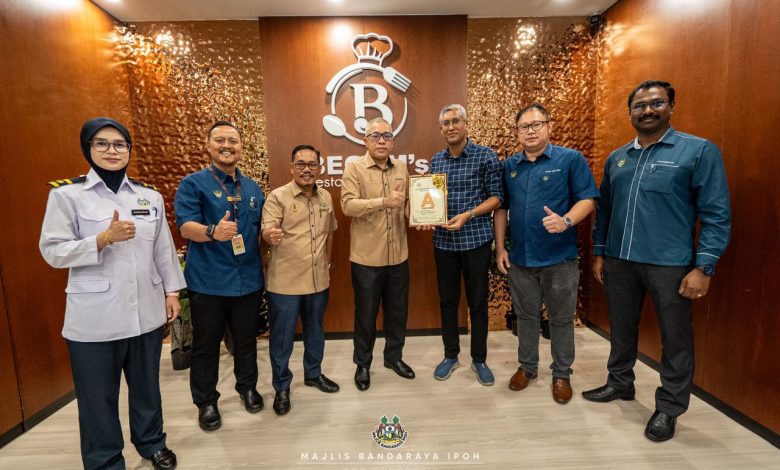
He said this after presenting the Grade A premises rating and evaluation certificate to Abul Kalam Sahul Hamid, Manager of Begum’s Restaurant & Café, at Canning Trade Centre 2.
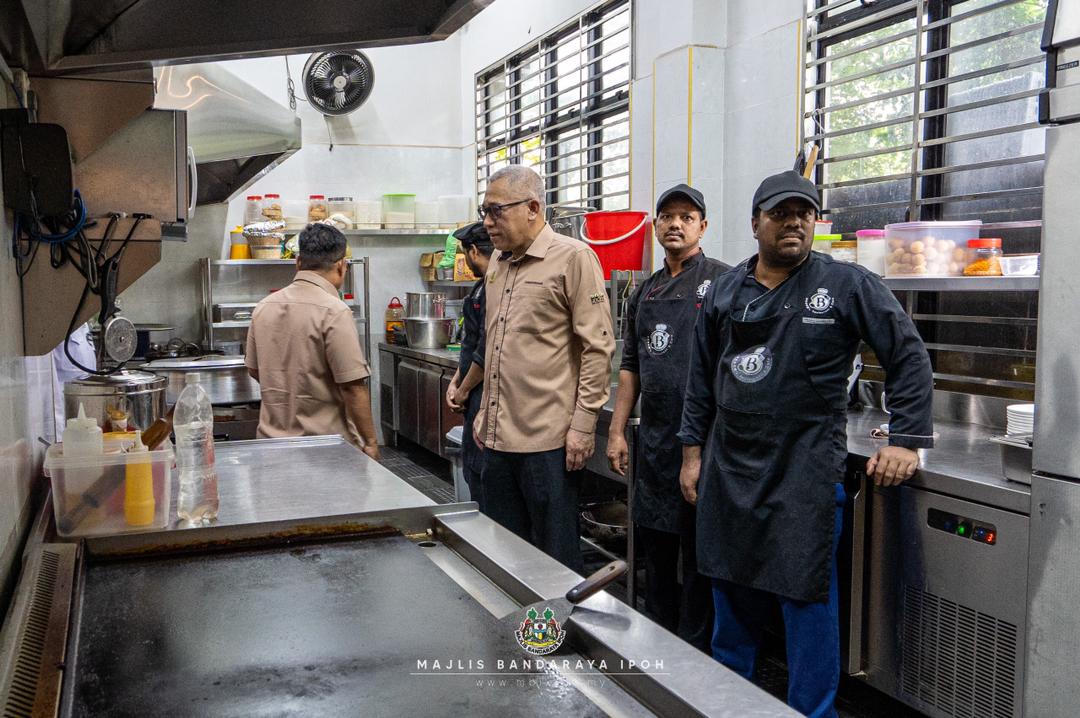
He added that the event was part of the ongoing efforts by the Food Safety and Quality Unit, Public Health and Municipal Services Department of MBI, to ensure that the cleanliness and food safety levels of licensed premises remain at the highest standards.
“MBI conducts regular monitoring of all food premises licensed under its administration.
This measure is taken to expand Grade A Certification recognition to restaurant, café, and food stall operators,” he said.
The Grade A recognition certificate is valid for two years from the date of issuance.
For premises wishing to renew their certificates, applications can be made at Level 5, Public Health and Municipal Services Department, MBI.
Authorized officers will carry out re-inspections based on the Food Premises Evaluation and Grading Form from the Local Government Department, Ministry of Housing and Local Government (KPKT).
Premises must achieve a cleanliness score of 86 percent or higher to qualify for re-certification.
The Grade A assessment takes into account the cleanliness level of the premises and toilets, based on the Clean, Attractive, and Fragrant (BMW) concept.
In addition, premises are required to provide documentation such as anti-typhoid vaccination records for all food handlers, ensure food handler training attendance, install grease traps, and conduct regular pest control activities.