By Joachim Ng
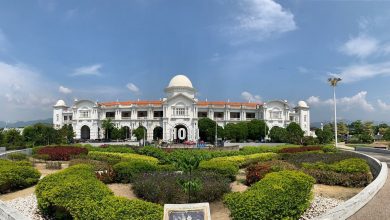
Does anyone remember that Ipoh won a global award last year? The award came to mind a month ago when the Housing and Local Government Ministry announced that Malaysia had been officially elected president of the United Nations Human Settlement Programme (UN-Habitat) General Assembly for the 2025-2029 term. Its presidency was unanimously approved by all 193 member states at the UN-Habitat Assembly in Nairobi on May 30.
“This is a shared glory for all Malaysians, as we continue to demonstrate our commitment and achievements in sustainable urban development,” said Housing and Local Government Minister Nga Kor Ming.
Last year, Ipoh won the UN-Habitat Scroll of Honour Award for its “Doughnut Economy” model that seeks to balance humanity’s needs with the planet’s ecological boundaries, where societal well-being coexists with environmental sustainability.
Ipohrians should rejoice at getting an international accolade, but at the same time the City Council must endeavour to find out whether this is a genuine award or just a PR show put up by the United Nations to mask a darkening global picture.
It has become obvious to climate scientists that the target limit of temperature increase to 1.5 degrees C above pre-industrial levels set nearly 10 years ago is very close to being surpassed.
Minister Nga Kor Ming also seems to be overdoing the hype for Malaysia. We are among the rogue nations – as are almost all countries – as we do lots of coal burning: 35% of Malaysia’s electricity is based on coal.
The urban air in Malaysia, especially Klang Valley, is generally rated bad. Kuala Lumpur’s Air Pollution last year exceeded the World Health Organisation’s guidelines by 261%. The Air Quality Index for Kuala Lumpur is 91, whereas for Sandakan it is only 29. Ipoh’s air quality is superior to KL as its index is 70. Don’t ever migrate to Klang Valley; don’t exchange life for a job.
The Road Transport Ministry seems equally set on PR as it shuts out important data. It recently praised its own achievements in getting an increasing volume of riders for MRT and LRT trains, while ignoring the increasingly heavy traffic jams in Klang Valley.
There are no roads in Klang Valley – not even the lorongs – that are free of traffic. Jams are a daily nightmare and stop-start traffic is the norm even for suburban roads. A 2016 study in the journal Environmental Science: Process And Impacts found pollution in stop-start traffic especially at traffic light intersections to emit toxic pollutants from petrol vehicles, especially the deadly PM2.5 particle, to be up to 29 times higher than in free-flowing traffic.
A near-identical situation now prevails in George Town, Penang, and may soon infect the growing city of Ipoh.
In stop-start traffic, vehicles are repeatedly accelerating from a stop, leading to spikes in emissions of pollutants – such as nitrogen oxides, carbon monoxide, PM2.5, and unburned hydrocarbons – during acceleration and idling than during steady cruising.
Engines (especially diesel) run less efficiently in congested conditions, leading to incomplete combustion and higher particulate emissions. Idling also wastes fuel and continues to emit pollutants even when the car isn’t moving.
In the previous article, we noted the worsening daily weather in Malaysia with daytime heat occasionally hitting a killer 37C and nighttime wet-bulb temperature readings at 34C-35C.
Air pollution is now a proven killer. It is suspected by some historians and medical researchers overseas that lung cancer may have started with air pollution as there was a surge in respiratory ailments including bronchitis, asthma, tuberculosis, and general chest diseases in 19th century Manchestor, the original bright spot of coal burning.
Lung cancer may have existed there at low, undiagnosed rates, but was drowned out by the far higher prevalence of infectious diseases and early deaths from other causes. By the early 20th century, lung cancer rates began to rise noticeably — correlating with urbanisation, coal smoke, and tobacco smoking.
In the 1950s, researchers like Sir Richard Doll linked smoking and air pollution to lung cancer through large epidemiological studies.
The medical profession in Malaysia does not acknowledge the connection between lung cancer and air pollution, especially in high traffic areas, possibly because of a landmark decision made by a coroner’s court in London five years ago.
Coroner Philip Barlow of Southwark Coroner’s Court in south London had ruled that the death in 2013 of Ella Kissi-Debrah, aged 9, was caused by acute respiratory failure, severe asthma and exposure to excessive air pollution. The principal source of her exposure was traffic emissions. The coroner said the girl’s mother was not informed of the health risks of air pollution.
Malaysia’s Health Ministry obviously does not want to be implicated in any way for respiratory diseases caused by traffic pollution. Hence, it prefers to focus on the evils of tobacco and vape smoking exclusively.
Petrol car sales are seeing yearly surges because the petrol industry is officially supported. That means shutting an eye to the health dangers of excessive traffic, especially in the Klang Valley where traffic jams and stop-start traffic from 7am to 8pm are a five-day phenomenon.
Malaysian doctors appear to show no concern over statistics produced by the University of Washington showing that air pollution caused 4.7 million early deaths worldwide in 2021. Road traffic is a leading contributor to dirty air and is responsible for 60% of outdoor particulate dust in major cities.
What can Ipohrians and Perakians do to change the situation? Petition the Ipoh City Council and Perak State Government to organise a big switch to electric vehicles (EVs). Electric vehicles don’t emit PM2.5 from exhaust, and their regenerative braking reduces brake dust. But EV manufacturers do need to ensure that the source of power for battery manufacture isn’t coal, and that regenerative braking is constantly improved to keep reducing the amount of non-exhaust particles.
Dealers of foreign brands such as Honda and Toyota are keen to make the switch as EVs are more profitable. How come? Open the car bonnet and you will immediately see why the producton cost of an EV is lower than that for a petrol vehicle. In the United States, Honda’s mid-sized EV Prologue sold some 15,000 units last year, cutting into Tesla’s supremacy.
The Automotive Hi-Tech Valley at Proton City in Tanjong Malim can be the key driver of a transformation of our city roads from petrol vehicles to all-electric vehicles. Built here is the Proton e.MAS 7 which, at 730 units sold every month as an average, is Malaysia’s fastest selling EV.
Fastest selling at only 730 units a month? It’s a lame bird claiming to have clocked the fastest speed. With prices starting at RM105,800 (Prime) and RM119,800 (Premium), these EVs aren’t for the mass market and play no role in climate action.
Government policy stipulates that imported EVs cannot be sold below RM100,000 and are subject to very high taxes. It keeps petrol cars on the road. This year up to end-May, there were only 5,088 EV units newly registered, compared to 124,735 units for petrol vehicles. As we mentioned in the previous article, Malaysia is in a dance of death with climate change.
Yet there is a very easy “kill two pollutants with one swipe” solution: Fix a target of 50% EVs for all major cities – KL, PJ, Ipoh, JB, Penang – to be achieved in 2040 by removing excise tax and low quotas. Make the industry less profit-oriented. The huge volume of unsold petrol can be put to climate action by using it to replace coal for electricity generation. Citizens must get the Government moving in the right direction immediately to save lives.
========================================
Disclaimer: The views and opinions expressed in this article are those of the author and do not necessarily reflect the official policy or position of Ipoh Echo