
By Anne Das
Dementia is an increasing concern among older Malaysians.
The latest National Health and Morbidity Survey (NHMS) 2025 by the Ministry of Health Malaysia shows a clear rise from 8.5% in 2018, pointing to a national shift as the country ages.
Malaysia is also moving steadily towards becoming an aged nation. Today, there are more than 4 million Malaysians aged 60 and above, and that number continues to grow as life expectancy increases.
In Perak, the shift is already more pronounced. Around 14 to 15% of the state’s population is aged 60 and above, the highest in the country.
That means roughly 1 in 7 people in Perak is now a senior, placing the state among the country’s fastest ageing populations.
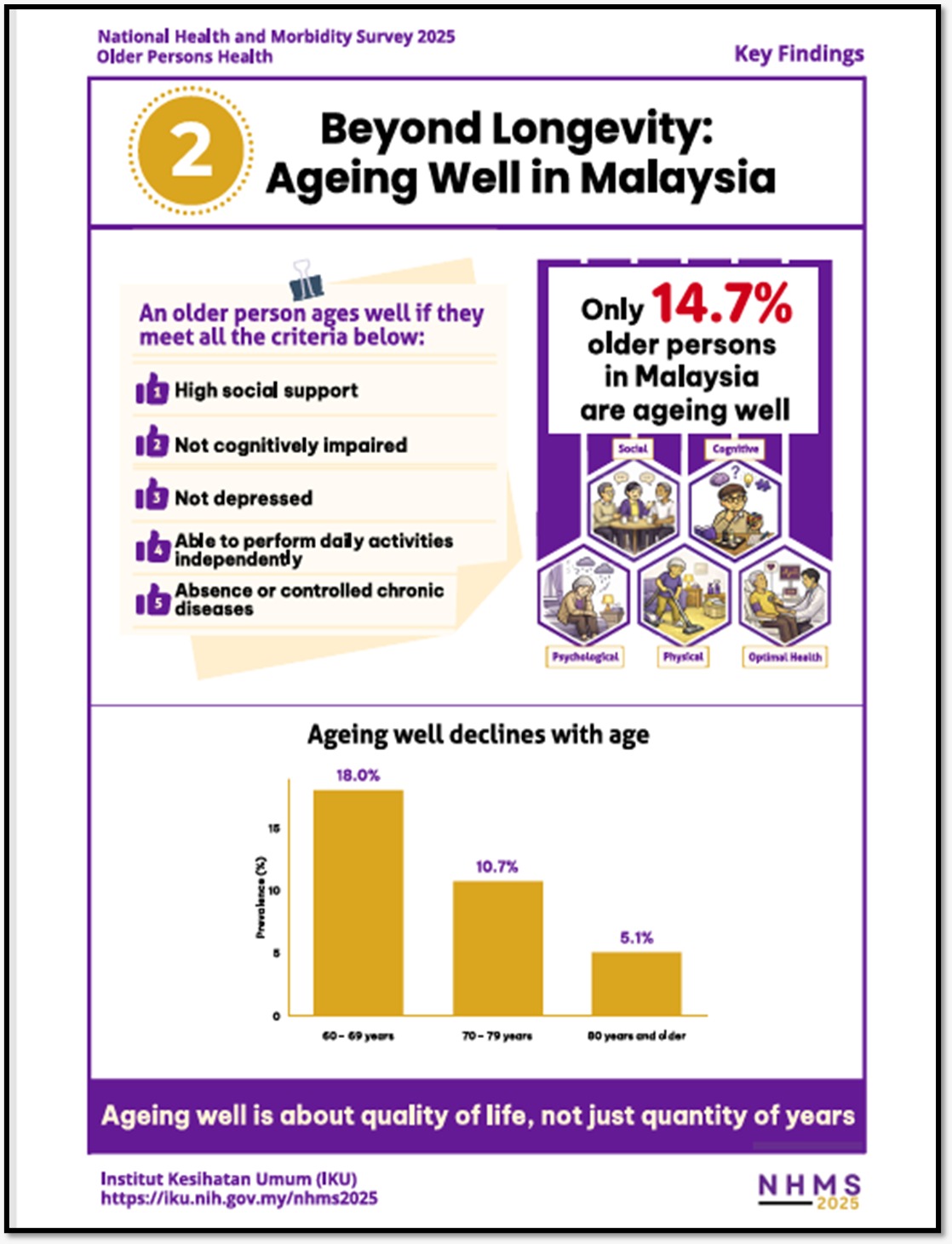
Further findings from the NHMS 2025 survey show how these risks build over time. Among Malaysians aged 80 and above, dementia affects nearly 35%, the reality of longer lifespans.
At the same time, many of the underlying health conditions linked to cognitive decline are already widespread. 73% of older Malaysians have high blood pressure, 39% have diabetes, and 76% have high cholesterol, with nearly 7 in 10 living with at least two of these conditions.
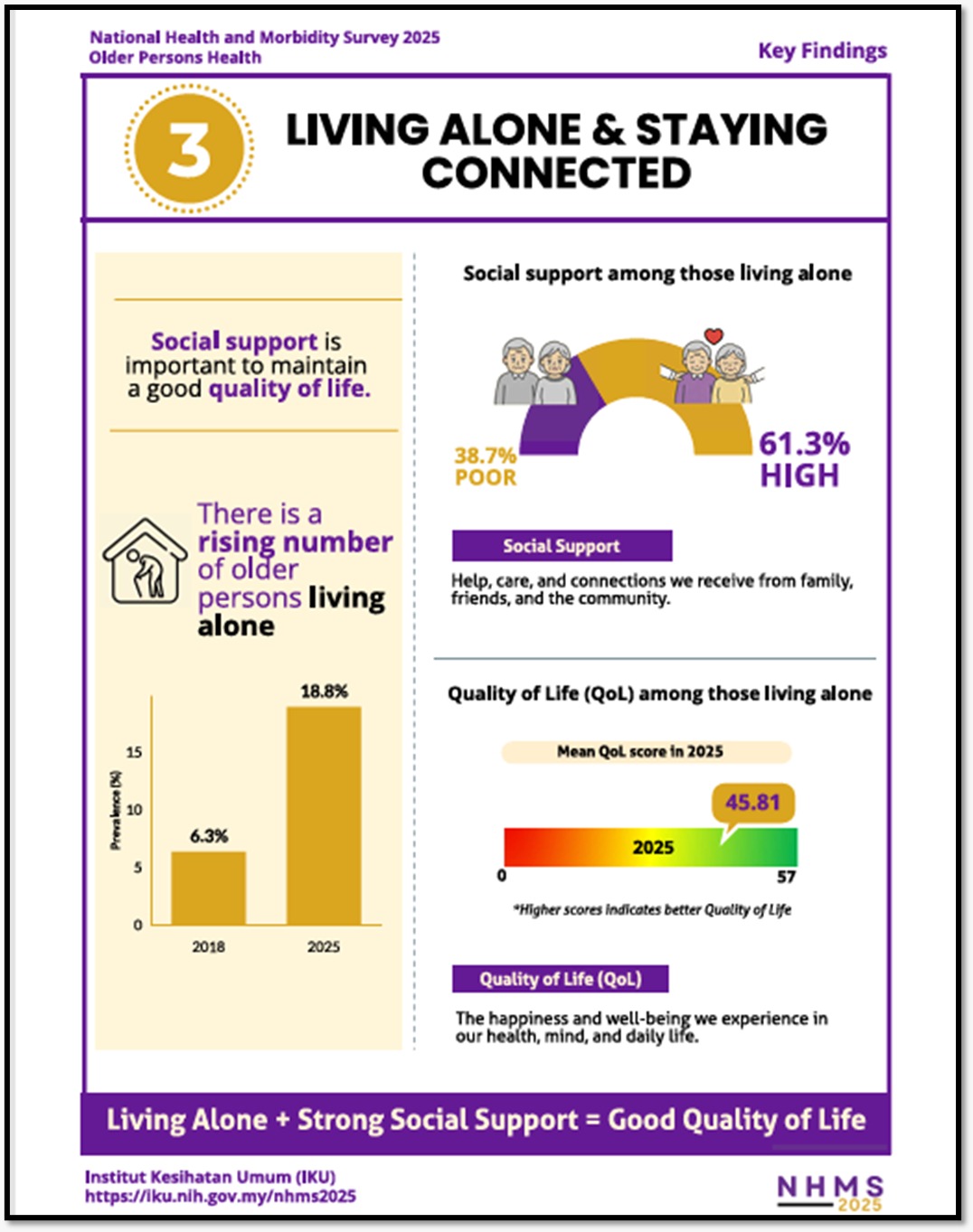
Lifestyle factors also play a role. Around 3 in 10 seniors are not physically active, while a growing number of older Malaysians are living alone. Nearly 4 in 10 report low levels of social support, highlighting how isolation can affect overall well-being.
For many, it starts small. A forgotten name. A missed step. Then it grows.

Dementia does not affect one person alone. It reshapes entire households. The survey shows that 1 in 3 caregivers of dependent older persons are already experiencing some level of burden, from emotional strain to financial pressure. In many cases, the role of caregiver begins without preparation.
Health groups including the Dementia Alliance of Malaysia (DAMAI), Alzheimer’s Disease Foundation Malaysia and Dementia Society Perak have described the findings as a clear signal that brain health must now be treated as a national priority.
They note that the rise in dementia comes despite improvements in other aspects of ageing. And warn that without stronger intervention the impact will extend beyond individuals to affect households, healthcare systems and the wider economy.
 Malaysia already has a roadmap in the Dementia Action Plan 2023 to 2030, which outlines strategies for awareness, early detection, caregiver support and community-based care. However, advocates point out that implementation has yet to be matched by dedicated and visible funding, calling for stronger commitment at the national level.
Dementia is not only a medical condition. It changes how people live, care and plan for the years ahead. In a state where 1 in 7 people is already a senior, this is something more households will encounter over time.

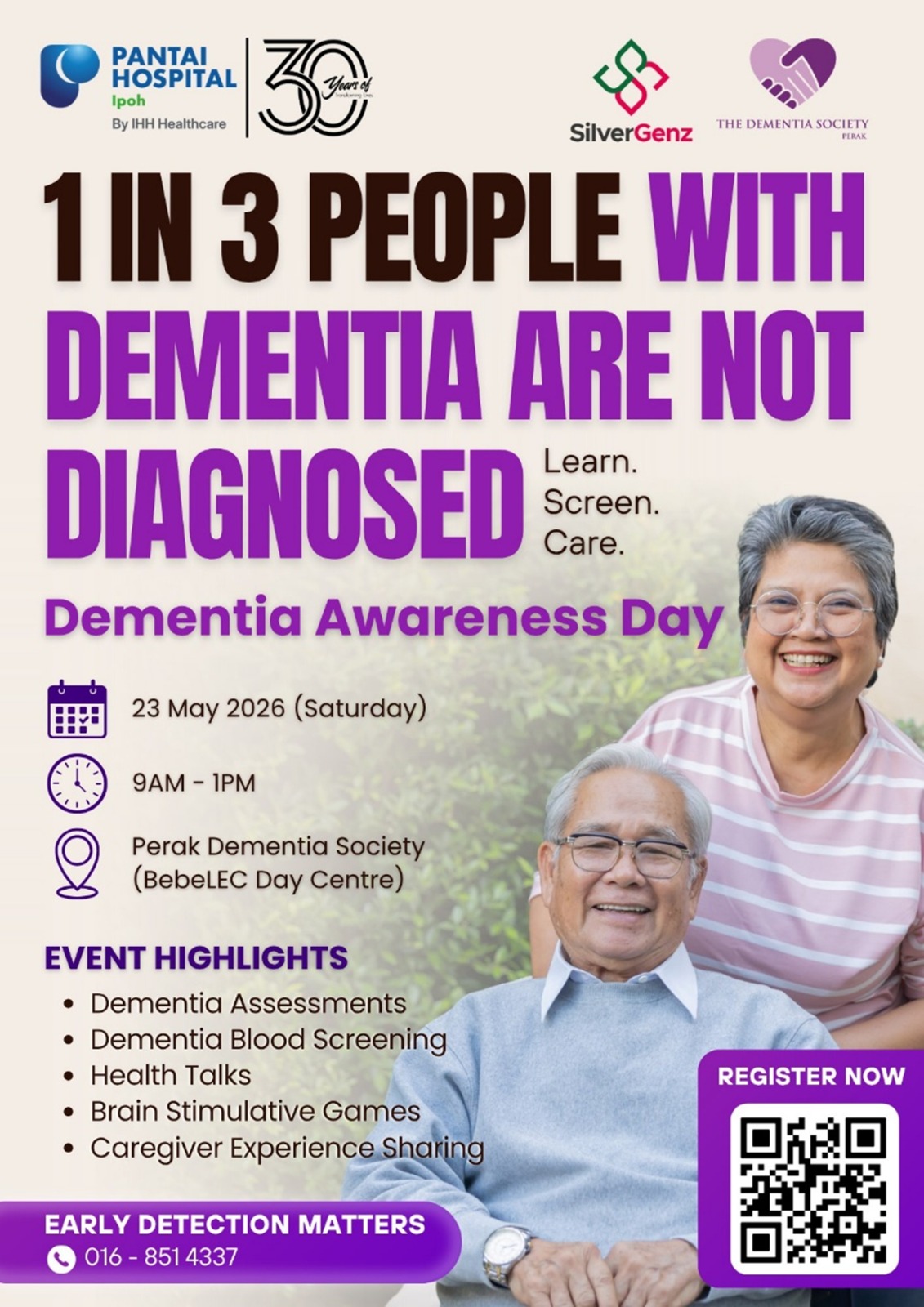
Support is already available through the Dementia Society Perak, where individuals and caregivers can seek guidance, connect with others facing similar challenges, and access programmes designed to support both patients and caregivers.
“Dementia is a progressive condition. Planning ahead and building a support network can make a real difference to how people cope over time,” said Professor Dr Esther Ebenezer, Chairperson of the Dementia Society Perak.
The NHMS 2025 findings also point to the need for stronger systems moving forward. From risk reduction to earlier detection and community-based care, the focus is now on building support structures that can respond to an ageing population in a more coordinated and sustainable way.
For more details and enquiries:
📍 Dementia Society Perak, 56 Jalan Lang, Padang Tembak, Ipoh
📞 05-506 0806 📧 tdsperak@gmail.com
📘 Facebook: The Dementia Society Perak
🌐 https://thedementiasocietyperak.org/
🌐 National Health and Morbidity Survey 2025: https://iku.nih.gov.my/nhms2025