By Ronald Benjamin
Association for Welfare, Community and Dialogue
Being a Human resources practitioner over the years ,I have seen the evolutionary progress in the management of Safety and Health in industries .
The Occupational Safety and Health Act (OSHA) 1994 transformed Malaysia’s workplace safety from a prescriptive, government-enforced system into a modern, self-regulatory framework.
Before OSHA 1994, legislation like the Factories and Machinery Act (FMA) 1967 was highly prescriptive and limited to specific sectors like manufacturing and construction.
OSHA 1994 broadened the scope holistically to address both physical and psychological health hazards.
This evolution shifted accountability squarely onto employers and employees, culminating in the comprehensive 2022 amendments that expanded coverage to nearly all workplaces and mandated strict risk management.
Currently the aspects of safety and health are given a broader narrative with certain industries moving towards implementing the Environmental,Social and Governance system (ESG) where there is an evenly balanced emphasis on the social dimension of ESG.which include the upgrading Safety and Health system as a key requirement for ESG certification.
The implementation of safety and health practices are audited by external parties linked to ESG besides the JKKP which is the Government authoritative body to ensure OSHA compliances.
In essence, in spite of legislation and current development, many industries are still in the reactive stage rather than a proactive stage in addressing the safety and health concern.
In this context of new challenges it’s time to raise the standards and enhance the Safety and Health process in industries through technological innovation that addresses risk in real time.
These could be done by the AI transformation of Occupational Safety and Health (OSH) from a reactive system into a proactive, predictive one.
By integrating computer vision, IoT sensors, and predictive analytics, industries especially high-risk sectors like manufacturing and construction can continuously monitor environments, detect hazards before incidents occur, and protect workers from dangerous tasks.
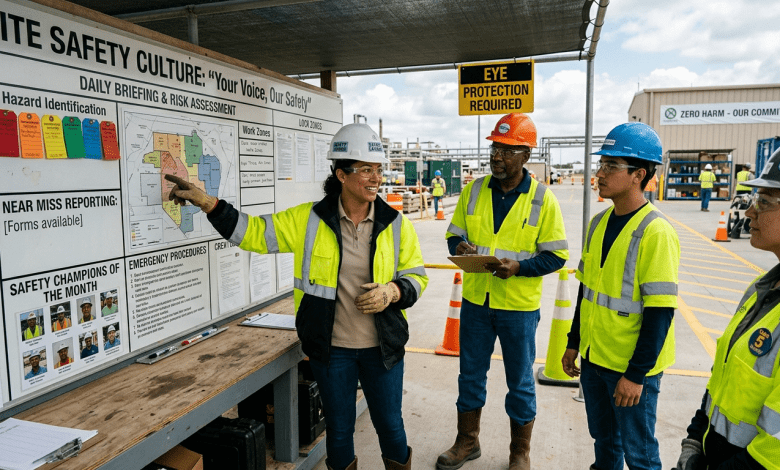
For example AI-powered cameras scan workspaces in real-time to ensure workers are wearing Personal Protective Equipment (PPE) and detect and flag unsafe behaviors like improper machinery operation or restricted-area breaches.
AI-equipped wearables such as smart vests, helmets, or wristbands track workers’ vital signs. They can detect early signs of physical fatigue, heat stress, or heart rate anomalies to prevent sudden emergencies.
In order to address these current realities ,Safety and Health practitioners should be sent for training to upgrade themselves in AI technology.
The AI innovation of managing safety and health, processes become more of a horizontal and departmental ownership process than the current vertical system where safety behavior tends to be a top down approach where it depends on the seriousness of the top management in driving necessary processes and results from their Safety and Health System.
Keeping this in mind the Association for Welfare, Community and Dialogue would like to urge the Government to facilitate a dialogue among industries on enhancing and upgrading our Safety and Health standards by embracing AI technology.
The Government should encourage and incentivise the use of AI technology in the workplace to protect the workforce from costly accidents.
There is a need to change the current Malaysian culture of reacting to safety and health issues, to being proactive and predictable,and this is possible with the proper use of AI tools of innovation.