By Prema Arasu
This story, offered to Ipoh Echo’s readership, is aimed at keeping alive the history, hopes and memories of some eminent Perakeans.
*This is the second part of a two-part series
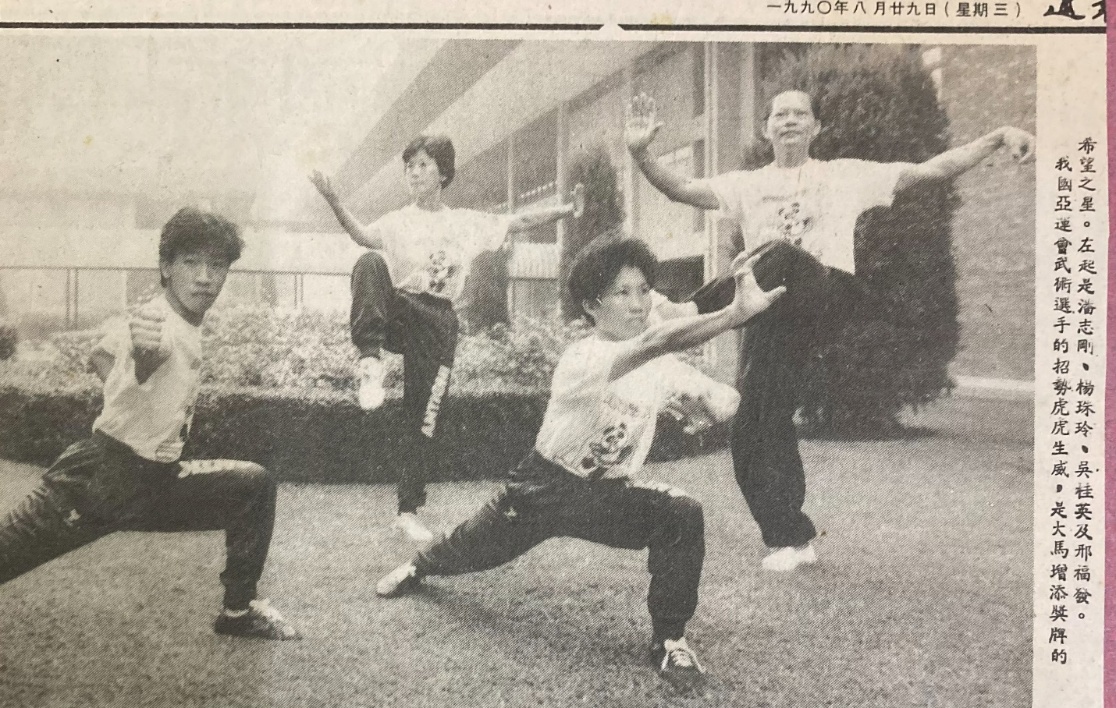
The Malaysian Wushu team in 1990 comprised six athletes: one male and one female for Taichi-quan and for Nan-quan southern style boxing; and two males for Chang-quan northern style boxing. The coaches from China worked with us for a few months. We only received a small allowance during this time but I was fortunate in that my family was very supportive.
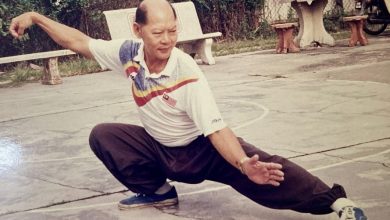
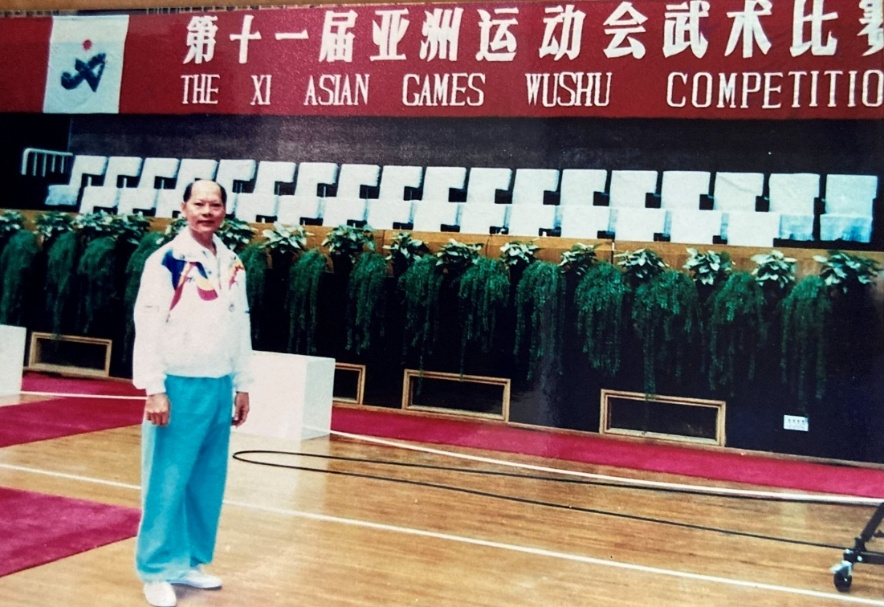
The Competition in Beijing was a very grand affair but also very intense. We were proud to represent Malaysia, and did our best but we didn’t win a prize. I competed in the 42-step Yang Taichi. This style has many difficult movements such as very high toe and heel kicks, and very low crouches which can be challenging for a 49-year-old body. The Chinese competitors were half my age and had themselves started their training when quite young. In Malaysia, few young people were dedicated to practicing Taichi in those days.
After inclusion of Wushu in the 1990 Asian Games, the World Wushu Championship was organized and held in Kuala Lumpur in 1993. The stadium was bustling and congested but alas, we still didn’t do very well.
After these experiences and recognizing that training should start at an early age, I returned to Ipoh and joined the Perak Wushu Association. Several of us underwent training to be coaches and judges. I went for seminars and more training including in Shanghai with support from the Wushu Association. I enjoyed introducing Taichi at Ipoh schools including Sam Tet, St. Michael’s and the Perak Girls School during Saturday morning co-curricular activities. With major changes to the public-school co-curricular schedules, I concluded this 30-plus years of outreach in 2025.
For adults, I started Taichi classes at the Ipoh Swimming Club in 2000 with 10 students and it is still going strong with 20-25 regulars. I also started a class in Pasir Pinji in 2020; through public donations and fund-raising dinners, the building and large hall there (Persatuan Chenshi Taijiquan) has served as a convenient central venue for practitioners. I am currently one of the two vice-presidents for the association.
Malaysia’s young athletes now excel in Wushu as seen at the biannual SUKMA games as well as the South East Asian Games. The Bukit Jalil Sports School has also made a difference. Perak students have performed at the national and international level, and bright stars have emerged from Melaka and Sarawak in particular. At the 2025 World Wushu Championships in Brazil, I was very happy to hear that the Malaysian team won eight medals including five golds. There continues to be strong lobbying efforts to include Wushu in the Olympics.
Another thrilling experience for me after the Beijing event in the 90s was being selected as an extra in the filming of “Anna and the King”. The film stars were Jodie Foster and Chow Yun Fatt. Much of the production was done in Perak and Penang in early 1999. I played a small part as a monk and the King, Chow Yun Fatt himself, went striding past and actually bowed to me in reverence to the stature of all Buddhist monks.
Questioned about his spiritual beliefs, Sifu said he attended church during his years at the Methodist School, and also remembers visits from the Jehovah Witness missionaries who went from house to house. But hearing conflicting interpretations from different denominations of Christianity, he didn’t follow this path. At home, he is respectful of cultural tradition and prays to the Buddhist altar that was set up by his father-in-law. He is more committed to the values that he has learnt through Wushu.
As a teacher, Sifu believes that people respect you when you hold yourself upright, are disciplined and show a genuine desire to impart what you know. Taichi’s principles are about being self-righteous, doing things in the right way, and behaving properly with heart and thought. He teaches Wushu so that one can defend oneself if needed, and for physical wellbeing. It is never about being offensive.
Many of his students describe Sifu as a man who never rushes and has tremendous patience in correcting and repeatedly teaching proper positioning and movements. He seems to know what you must know, what you don’t know and what he wants you to know. He observes each student so that he can effectively impart his own knowledge.
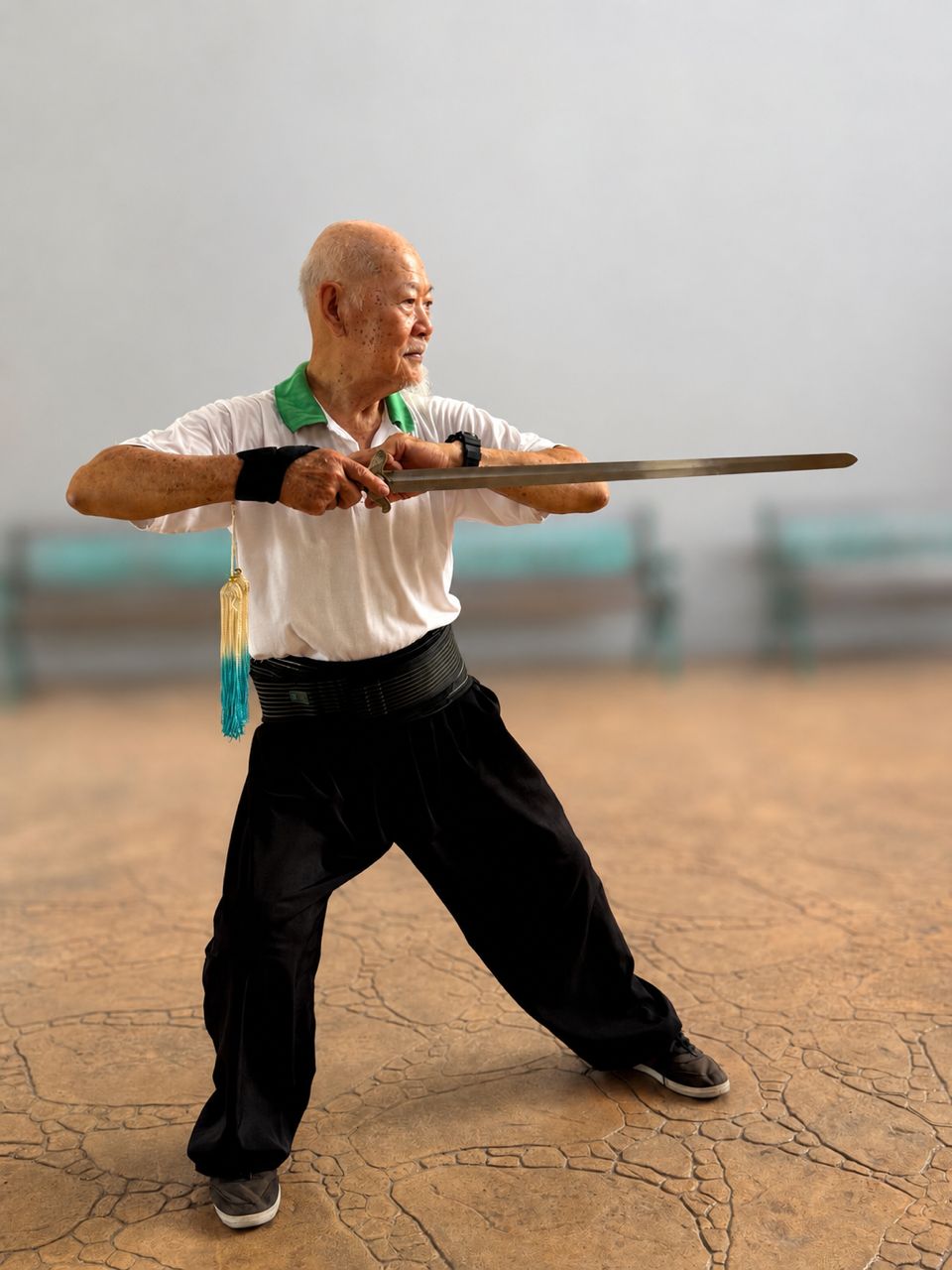
Sifu concluded that it is never too late to learn Taichi but it’s better to start at a young age. You
surrender yourself to the training. Forget yourself and let go of your ego so that the exercises can impact everything in your daily existence, how you walk, talk and live. After class, Taichi practitioners report feeling fresh, mentally alert, physically agile and energized. Tensions subside, you sleep well, you wake early, your digestion is good when you have a good routine.
***
© Prema Arasu, September 2026
About Prema Arasu:
Prema is a retired biomedical researcher and university professor. She enjoys activities such as Yoga and Taichi, being out in nature, and doing short term projects related to science and education. wmnwsdm@gmail.com