By: Zaki Salleh
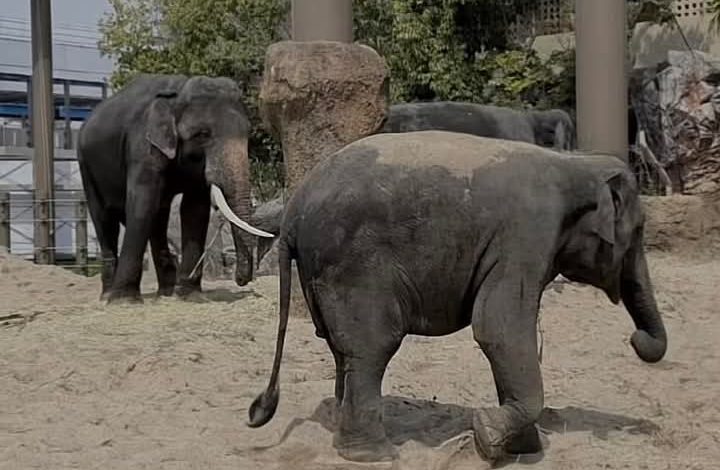
TAIPING: The condition of the Malaysian elephants Dara, Amoi and Kelat, currently housed at Tennoji Zoo, remains stable and well managed.
Taiping Municipal Council (MPT) said it remains committed to ensuring transparency by providing regular updates to avoid misunderstandings and baseless speculation.
The statement followed growing public attention, concern and feedback regarding the welfare of the animals in recent months.
Daily observations showed that the elephants’ health, appetite, behaviour, and daily activities remained good under close supervision by zoo personnel and veterinarians.
Body weight records also showed positive gains, with Dara increasing by 235 kilogrammes, Amoi by 220 kilogrammes and Kelat by 460 kilogrammes since being placed at the zoo.
Environmental enrichment programmes, quality nutrition and Protected Contact handling training are also being continuously implemented to ensure the animals’ welfare remain safeguarded.
Addressing speculation involving male elephant Kelat, MPT explained that changes in the animal’s behaviour were linked to the musth phase, a natural biological process experienced by mature male elephants.
During the period, hormonal changes involving testosterone may cause Kelat to become more active, sensitive and aggressive than usual.
As a result, the zoo has implemented several special management measures, including daily behavioural monitoring, regular veterinary examinations and controlled isolation to ensure the safety of both the animal and staff.
Monitoring of food and water intake, faeces and urine is also being conducted alongside environmental management efforts to reduce stress on the elephant.
MPT also denied claims that Kelat was suffering from eye or ocular problems, saying the visible condition around the elephant’s eye was believed to be caused by swelling of the temporal gland during the musth phase.
According to the statement, the condition is a normal physiological response commonly seen in mature male elephants and not the result of any serious illness.
Meanwhile, Elephant Business Inc has also been engaged by Tennoji Zoo to train staff in elephant management using the safer and more systematic Protected Contact approach.
MPT further stressed that allegations of “force breeding” were untrue and had never taken place, as such practices are strictly prohibited under the Memorandum of Understanding between both parties.
At the same time, MPT said fragments of Kelat’s tusk discovered inside the enclosure were believed to have detached naturally due to daily use, with veterinary checks confirming the elephant had not suffered any serious injuries.